
The American Pancake is a cornerstone of global breakfast culture, synonymous with weekend comfort and the bustling energy of a classic city diner. This isn’t just a simple batter-based dish; it is a structural marvel designed to be both pillowy and substantial. A perfect pancake is defined by its architectural height, its uniform golden-brown crust, and a sponge-like interior that is engineered to absorb maple syrup without becoming heavy or sodden.
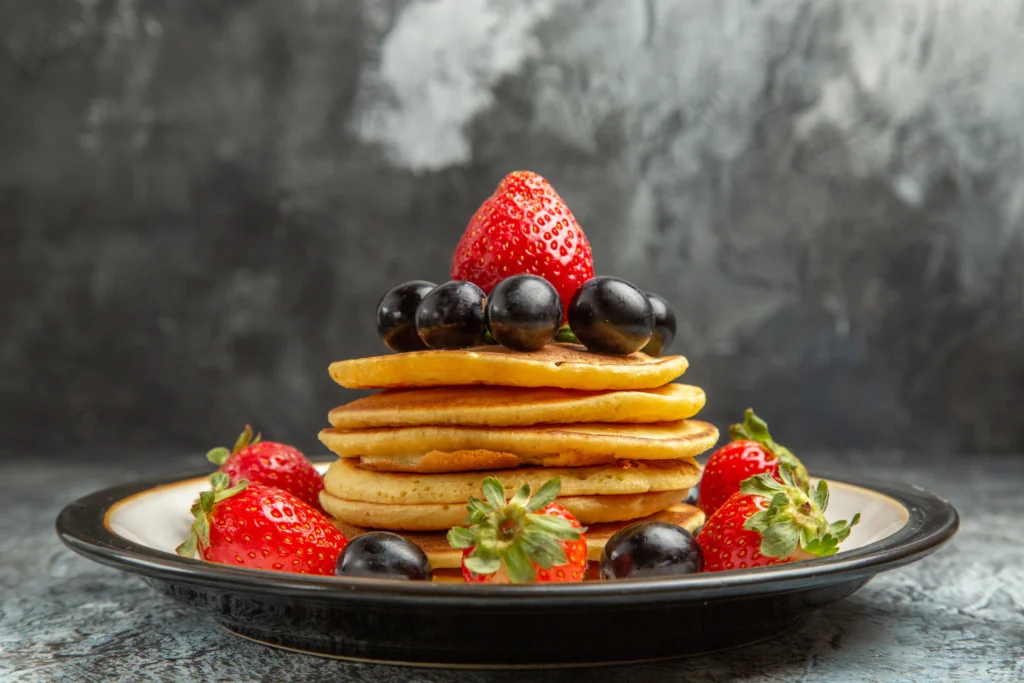
Fluffy Centers & Golden Edges
To achieve the Breakfast Classic”—a pancake that is nearly an inch thick in the center but has a crisp, buttery snap at the perimeter—you must focus on leavening activation and surface tension.
1. The Leavening Reaction
The fluffiness is a result of a chemical reaction between the lactic acid in buttermilk and the sodium bicarbonate in baking soda.
- The Key: This reaction starts the moment liquid hits dry ingredients.
- The Strategy: Do not over-whisk. Lumps are your friend. They act as “pockets” that trap the carbon dioxide, preventing the air from escaping and ensuring the center stays airy.
2. The “Rest” Phase
Batter needs at least 10 minutes of stillness. During this time, the flour hydrates and the gluten (the protein that makes bread chewy) relaxes. A rested batter results in a pancake that is tender and “cake-like” rather than elastic or gummy.
3. Mastering the Golden Edge
The “Golden Edge” is a result of the Maillard reaction combined with shallow frying.
- The Fat Choice: Use clarified butter (Ghee) or salted butter.
- The Method: When the butter foams in a hot pan, it migrates to the outer rim of the batter. This “fries” the edges while the center steams upward, creating a textural contrast between the soft middle and the crispy exterior.
4. Surface Cues for the Flip
Flipping too early is the most common mistake.
- The Signal: Wait for bubbles to form and pop. If the hole left by the bubble stays open, the structure is set enough to flip.
- The Result: This ensures the “lift” is locked in, preventing the pancake from deflating into a flat disc.
About me
Based in London, [Name] is a recipe developer and food photographer who has led the culinary conversation at [Site Name] since 2025. With over a decade of experience, He specializes in creating triple-tested, accessible recipes that bring gourmet flavors to the everyday home kitchen.
The Triple-Threat of Buttermilk
1. The “Volcano” Effect (Instant Lift)
The most important job buttermilk has is reacting with baking soda (a base).
- The Logic: Regular milk is neutral, so it just sits there. Buttermilk is acidic. The moment they touch, they create an immediate “fizz” of carbon dioxide.
- The Result: This gas gets trapped in the batter, inflating your pancakes from the inside out as soon as they hit the heat. That’s how you get a 1-inch thick pancake instead of a flat crepe.
2. Protein Weakening (The “Tenderizer”)
Flour wants to become “bready” and chewy when you stir it because of gluten.
- The Logic: The acid in the buttermilk acts as a structural relaxant. It interferes with the gluten strands, preventing them from becoming too tight or elastic.
- The Result: You get a “short” crumb—meaning the pancake breaks apart easily and feels like soft cake rather than a piece of sourdough bread.
3. The “Flavor Cut”
Pancakes are essentially a “sweet and fat” delivery system (syrup and butter).
- The Logic: Without an acid, the flavor profile is one-dimensional and “heavy.”
- The Result: The subtle tang of the buttermilk cuts through the sugar, making the dish feel lighter on the palate so you don’t feel “sugar-overloaded” after three bites.
4. Faster Browning (The Maillard Reaction)
Because of the way buttermilk breaks down sugars in the flour, it encourages the surface to caramelize more quickly.
- The Result: You get that iconic golden-brown skin on the outside while the inside stays steaming and moist. Without it, you often have to overcook the middle just to get a little color on the outside.
Tips for Tall, Tender Pancakes
- Thick Batter: Ensure the batter is thick enough to hold its shape; if it spreads too thin, it can’t rise up.
- The “Double Pour”: Pour half the batter, wait 20 seconds, then pour the rest directly in the center to build height.
- Fresh Leavening: Use baking soda/powder less than 6 months old. Stale powder means zero lift, regardless of buttermilk.
- The “No-Press” Rule: After flipping, never press down with your spatula. It crushes the air bubbles and turns “fluffy” into “flat.”
- Lid Method: Cover the pan with a lid for the first 2 minutes. The trapped steam helps the thick center cook and rise rapidly.
- Folded Egg Whites: For extreme height, whisk whites to soft peaks and fold them in last. It’s like adding “shocks” to your batter.
Ultimate “Cloud & Crisp” Buttermilk Pancakes
Equipment
- 1 Large Mixing Bowl For the dry ingredients; ensure it's deep enough to avoid flour dusting your counters.
- 1 Medium Mixing Bowl For whisking the wet ingredients (buttermilk, eggs, butter) before combining.
- 1 Cast-Iron Skillet or Griddle Heavy-bottomed pans hold heat more evenly, which is key for those golden edges.
- 1 Silicone Spatula Perfect for folding the batter gently without over-mixing.
- 1 Whisk To ensure there are no large pockets of dry flour in the wet-dry transition.
- 1 1/3 Cup Measure Using a consistent measure ensures all pancakes are the same size and cook at the same rate.
- 1 Wide Turner/Spatula A thin, wide edge makes it easier to flip the pancakes without collapsing their height.
Ingredients
- 2 cups All-Purpose Flour Spoon and leveled to avoid dense pancakes.
- 2 tbsp Granulated Sugar For sweetness and to help with the golden browning.
- 2 tsp Baking Powder Provides the primary vertical lift.
- 1 tsp Baking Soda Reacts with the buttermilk for "fluffy" height.
- 1/2 tsp Kosher Salt Essential to balance the sweetness of the syrup.
- 2 cups Buttermilk Use full-fat for the best "tender" crumb.
- 2 large Eggs Room temperature helps the batter stay smooth.
- 4 tbsp Unsalted Butter Melted and slightly cooled before mixing.
- 1 tsp Vanilla Extract Adds a floral, bakery-style aroma.
- As needed tbsp Salted Butter For the pan—creates the signature crispy "lace" edges.
Instructions
- Prep the Dry Mix: In your large bowl, whisk together the flour, sugar, baking powder, baking soda, and salt. Ensure the leavening agents are distributed evenly so the rise is uniform.
- Combine the Wet Mix: In the medium bowl, whisk the buttermilk, eggs, and vanilla. Slowly pour in the melted butter while whisking constantly to prevent the butter from clumping.
- The "Lumpy" Fold: Pour the wet ingredients into the dry. Using a silicone spatula, fold gently until just combined. Stop immediately when the large flour streaks disappear—small lumps are essential for a tender center.
- The Essential Rest: Set the batter aside for 15 minutes. You should see small bubbles forming on the surface as the buttermilk activates the baking soda.
- Heat the Surface:Pre-heat your cast-iron skillet over medium-low heat. Lightly buff the surface with a buttered paper towel. You want a thin, shimmering film, not a pool of grease.
- The Double-Pour: Scoop 1/3 cup of batter onto the pan. For extra height, wait 20 seconds and pour an extra tablespoon of batter directly into the center of the circle.
- The Patient Flip: Wait until bubbles form and burst, leaving tiny permanent holes. Use a wide turner to flip in one swift motion. Do not press down on the pancake with your spatula!
- The Golden Finish: Cook for another 1–2 minutes until the edges look crisp and the center feels springy. Serve immediately on a warm plate with salted butter and maple syrup.
Notes
Serving & Presentation
To highlight the “Cloud-Like” interior and those crispy, buttery rims, the presentation should focus on height and temperature.- The Warm Foundation: Always serve on pre-warmed plates. A cold plate will cause the fluffy center to collapse and turn the buttered edges greasy.
- The “Diner Stack”: Stack 3 to 4 pancakes high to retain internal heat. The weight of the top cakes helps steam the ones below, keeping them tender while you eat.
- The Butter Crown: Place a cold, salted butter pat on the very top. Let it naturally melt and “waterfall” down the sides to catch the crispy edges.
- Syrup Strategy: Serve maple syrup on the side or pour it slowly over the center. For the best experience, use warm syrup so it doesn’t shock the temperature of the fluffy crumb.
- The Garnish: A light dusting of powdered sugar through a sieve adds a professional “bakery” look, while a handful of fresh berries adds a tart contrast to the rich buttermilk flavor.