
The Scrambled Egg is a masterpiece of culinary simplicity, celebrated from the high-end breakfast rooms of Paris to the bustling morning cafés of Sydney and London. Every forkful offers a delicate journey: the buttery, cloud-like softness of the curd, the rich golden hue of farm-fresh yolks, and a subtle, savory finish that lingers on the palate. While often viewed as a basic dish, the perfect scramble is actually the hallmark of a disciplined kitchen, requiring a deep understanding of protein chemistry and heat management.
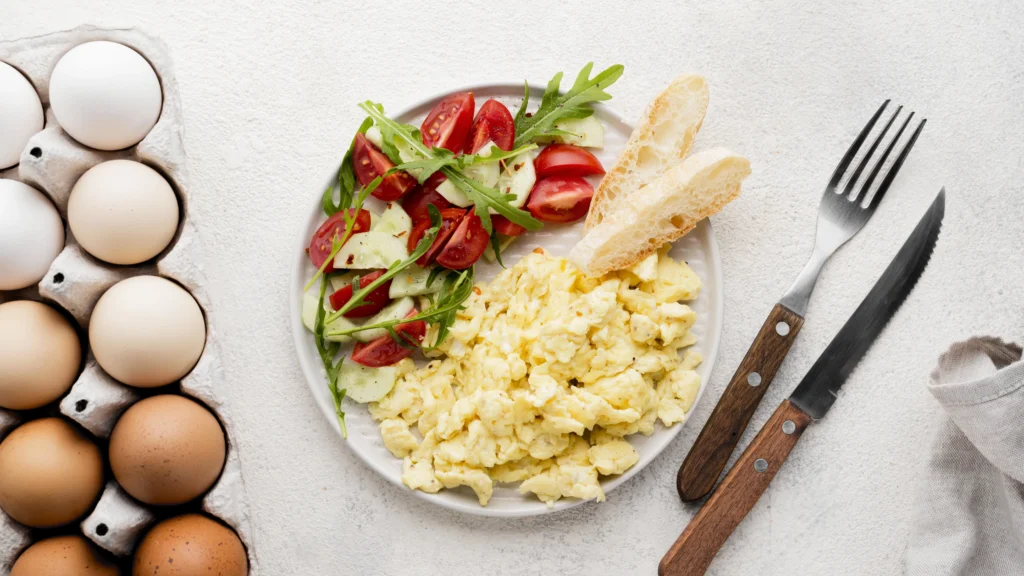
Soft Curds & Creamy Texture
To achieve the “French Style” soft curd—where the eggs look like folded velvet rather than dry chunks—you must prioritize fat over heat.
1. The “Low-Impact” Technique
- Cold Start: Place a knob of cold butter in a cold pan, then pour in your whisked eggs (mixed with a splash of heavy cream). Starting cold allows the proteins to set gradually, resulting in smaller, tighter, and silkier curds.
2. Heat Management: The “Off-and-On” Method
- Pulse the Heat: If you see steam rising or the eggs sticking too fast, lift the pan off the burner for 20 seconds while continuing to stir. This uses the pan’s residual heat to cook the eggs without “scorching” the moisture out of them.
- The “Wet” Finish: Remove the eggs from the heat when they still look slightly runny and glossy. They will continue to cook on the plate. If they look dry in the pan, they are already overcooked.
3. The Final Enrichment
- The Cold Finish: For a truly professional texture, stir in a teaspoon of cold butter, crème fraîche, or heavy cream right at the very end. This drops the temperature instantly, stopping the cooking process and creating a rich, luxurious mouthfeel.
About me
Based in London, [Name] is a recipe developer and food photographer who has led the culinary conversation at [Site Name] since 2025. With over a decade of experience, He specializes in creating triple-tested, accessible recipes that bring gourmet flavors to the everyday home kitchen.
The Anatomy of Perfect Scrambled Eggs
Perfect scrambled eggs are characterized by tiny curds, a glossy sheen, and a custard-like texture. Achieving this requires shifting from “cooking” to “tempering.”
1. The Fat-to-Protein Barrier
The biggest obstacle to soft eggs is syneresis—when egg proteins bond too tightly and squeeze out water, leaving you with a puddle on the plate and rubbery eggs.
- The Fix: Adding heavy cream or crème fraîche introduces fat molecules that physically get in the way of the protein bonds, ensuring the result stays tender and bonded.
2. The Cold Butter Start
Start with a cold pan or very low heat. Adding a knob of cold butter along with the eggs allows the fat to melt into the eggs as they warm up. This creates a natural emulsion, resulting in a rich, uniform flavor rather than just “eggs fried in fat.”
3. Constant Motion
Texture is a result of agitation.
- Large Curds: Let the eggs sit for seconds before stirring (diner-style).
- Perfect Small Curds: Stir constantly with a silicone spatula. By breaking up the curds as they form, you create a texture similar to a thick risotto or a savory custard.
4. The 80% Rule
Eggs are highly sensitive to carryover cooking. Because they are mostly protein and water, they continue to cook for at least 60 seconds after leaving the pan.
- The Pro Move: Remove the eggs from the heat when they are 80% set. They should look slightly “loose” and wet. By the time they hit the toast, they will be perfectly firm yet creamy.
Low-Heat Tips for Silky Eggs
To achieve that “silky” texture, you must treat the eggs like a delicate sauce (like a Hollandaise) rather than a solid food. Low heat is your primary tool for preventing the proteins from seizing.
Low-Heat Execution
- The “Double Boiler” Hack: If you struggle with heat control on a standard burner, cook your eggs in a heat-proof bowl over a pot of simmering water (bain-marie). This caps the temperature at 100°C (212°F), making it physically impossible to “fry” or brown the eggs.
- The “Cold Pan” Entry: Start your eggs in a completely cold pan with a knob of butter. Turn the heat to medium-low only after the eggs are in. This gradual warm-up prevents the bottom layer from shocking and toughening before you can start stirring.
- The “Ice Cube” Kill-Switch: If you feel the pan getting too hot and the eggs are clumping too fast, drop in a single ice cube or a teaspoon of heavy cream. This immediately drops the thermal mass of the eggs and buys you time to regain control.
- Visual Cue (The “Smear”): On low heat, the eggs shouldn’t form solid chunks. Instead, they should look like thickening heavy cream or a “smear” across the bottom of the pan. If you see steam, your heat is too high.
- Patience is a Technique: Silky eggs can take 6–8 minutes to cook on low heat. Resisting the urge to “crank it up” is the difference between a rubbery scramble and a world-class custard.
Silk-Path Scrambled Eggs (Bistro Style)
Equipment
- 1 Non-Stick Skillet Essential for silky eggs; an 8-inch pan is perfect for 2–3 eggs to maintain depth.
- 1 Silicone Spatula Flexible edges allow you to scrape every millimeter of the pan for small curds.
- 1 Fine-Mesh Sieve Optional: Used to strain the eggs for an ultra-homogeneous, restaurant-grade texture.
- 1 Small Mixing Bowl For whisking the eggs thoroughly before they hit the heat.
- 1 Whisk To emulsify the yolks and whites without incorporating too much air.
Ingredients
- 3 Large Eggs High-quality pasture-raised eggs yield a richer color.
- 1 Tbsp Unsalted Butter Use cold butter; half for the start, half for the finish.
- 1 Tbsp Heavy Cream Can substitute with Crème Fraîche for a slight tang.
- 1 Pinch Fine Sea Salt Add 15 minutes early (pre-salt) for maximum tenderness.
- 1 Pinch White Pepper Maintains the clean, uniform look of the yellow curds.
- 1 Tsp Fresh Chives Finely minced; added only at the final second of plating.
Instructions
- The Pre-Salt Prep:Whisk the eggs with a pinch of fine sea salt and let them sit for 15 minutes. This breaks down the proteins early to ensure the softest possible texture.
- The Emulsion Mix: Whisk in the heavy cream and white pepper until the mixture is uniform. For a professional finish, pass the mixture through a fine-mesh sieve into a clean bowl.
- The Cold Start:Place a knob of cold butter into a cold non-stick skillet. Pour the egg mixture over the butter before turning on the stove.
- Low and Slow: Set the heat to medium-low. As the butter begins to melt into the eggs, start stirring continuously with a silicone spatula.
- Constant Agitation: Use small, circular motions to break up the curds as they form. Keep the eggs moving so they never sit long enough to "fry" or brown.
- Heat Pulsing: If the eggs set too quickly or steam appears, lift the pan off the burner for 10 seconds while continuing to stir, then return it to the heat.
- The "Wet" Finish: Turn off the heat when the eggs look like a thick, glossy custard (about 80% set). They should still look slightly runny.
- The Thermal Kill-Switch: Stir in the remaining half-tablespoon of cold butter. This instantly stops the cooking process and adds a professional sheen.
- Serve Immediately: Move the eggs to a warm plate. Garnish with minced chives and serve with a side of crusty sourdough.
Notes
Serving & Presentation
- Warm the Plate: Essential for maintaining the “silky” texture; cold plates seize the egg proteins immediately.
- The “Mound” Style: Spoon eggs into a loose, glossy pile in the center. Avoid flattening them to keep the custard-like volume.
- Texture Contrast: Serve with toasted sourdough or brioche to provide a crunch that balances the soft curds.
- The Green Pop: Garnish with finely minced chives for a sharp, fresh aesthetic.
- Chef’s Finish: Add a tiny pinch of flaky sea salt at the very end to catch the light and add a subtle “snap.”